


 Sign in

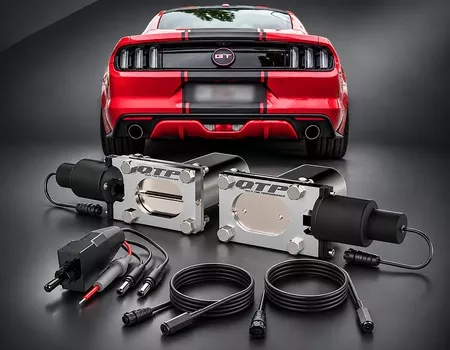
Choosing the Right Electric Exhaust Cutout Starts With Proper Fitment
Installing an electric exhaust cutout is an effective way to give your vehicle adjustable exhaust sound. However, not every exhaust system has the same amount of available space.
Some vehicles offer plenty of room underneath the chassis, while lowered sports cars, modern performance vehicles, and custom builds often have tighter clearance requirements.
That's why Quick Time Performance offers both standard and low-profile electric exhaust cutout configurations.
Understanding the differences can help you choose a system that fits properly and performs as intended.
What Is a Standard Electric Exhaust Cutout?
A standard electric exhaust cutout uses a round valve opening connected to an exhaust bypass pipe.
These systems are commonly used on classic muscle cars, trucks, hot rods, and vehicles with more available space beneath the chassis.
QTP's standard electric exhaust cutouts are offered in multiple diameters, making it possible to match the cutout to a wide range of exhaust configurations.
They provide an excellent solution when sufficient clearance is available for the valve, motor, and exhaust outlet.
When Should You Consider a Low-Profile Electric Cutout?
A low-profile electric exhaust cutout is designed to reduce the space required around the valve assembly.
Rather than using a conventional round valve arrangement, QTP's low-profile design uses a compact oval configuration intended for applications where packaging is especially important.
This makes low-profile valves worth considering for lowered vehicles, custom exhaust routing, and modern cars with limited underbody space.
The QTP Low Profile Electric Exhaust Cutouts provide electronically adjustable sound control while helping installers work around clearance limitations.
Standard vs. Low-Profile: What Should You Measure?
Before choosing a cutout, consider three important factors.
Ground clearance: Measure the available space between the exhaust system and the lowest practical clearance point under the vehicle. Account for suspension travel and road obstacles.
Exhaust diameter: Match the appropriate cutout or connection pipe to the actual outside diameter of the exhaust tubing.
Motor and outlet positioning: Leave adequate room for the motor, wiring connections, mounting hardware, and bypass outlet. The assembly must also be positioned to avoid unwanted heat exposure or contact with surrounding components.
These measurements are especially important when planning an installation on a vehicle with modified suspension or a custom exhaust system.
Does Low-Profile Mean Less Performance?
Not necessarily. A low-profile cutout is primarily a packaging solution, rather than a separate performance category.
Actual exhaust flow depends on valve geometry, pipe diameter, installation location, and the vehicle's overall exhaust configuration.
The goal is to select a valve that fits correctly while providing the desired exhaust sound and bypass flow.
Find the Right QTP Cutout for Your Build
Whether you're restoring a classic muscle car or upgrading a modern performance vehicle, proper fitment is essential.
Quick Time Performance offers adjustable electric exhaust technology for both conventional and space-restricted installations, allowing enthusiasts to choose a configuration suited to their application.

